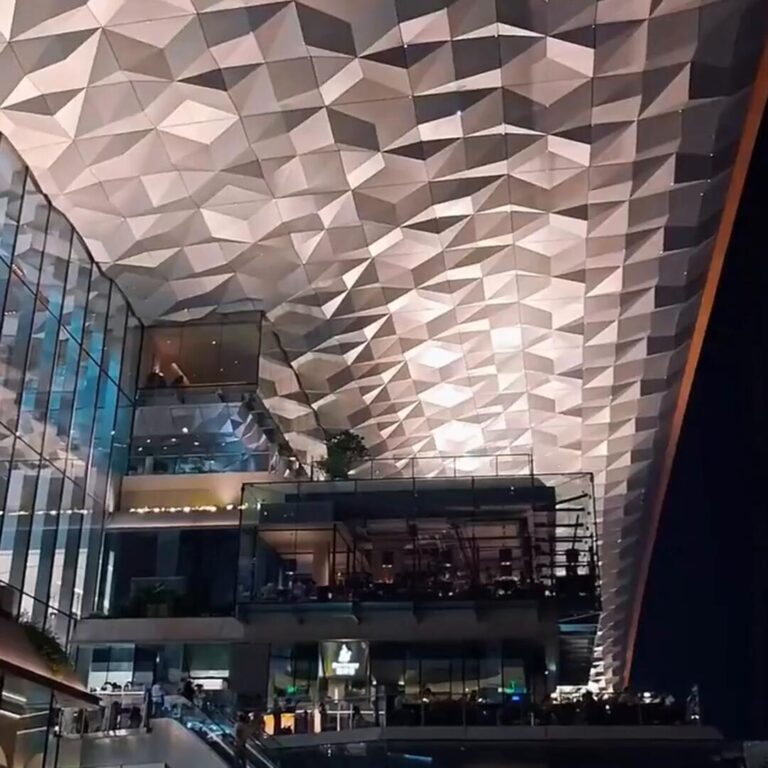



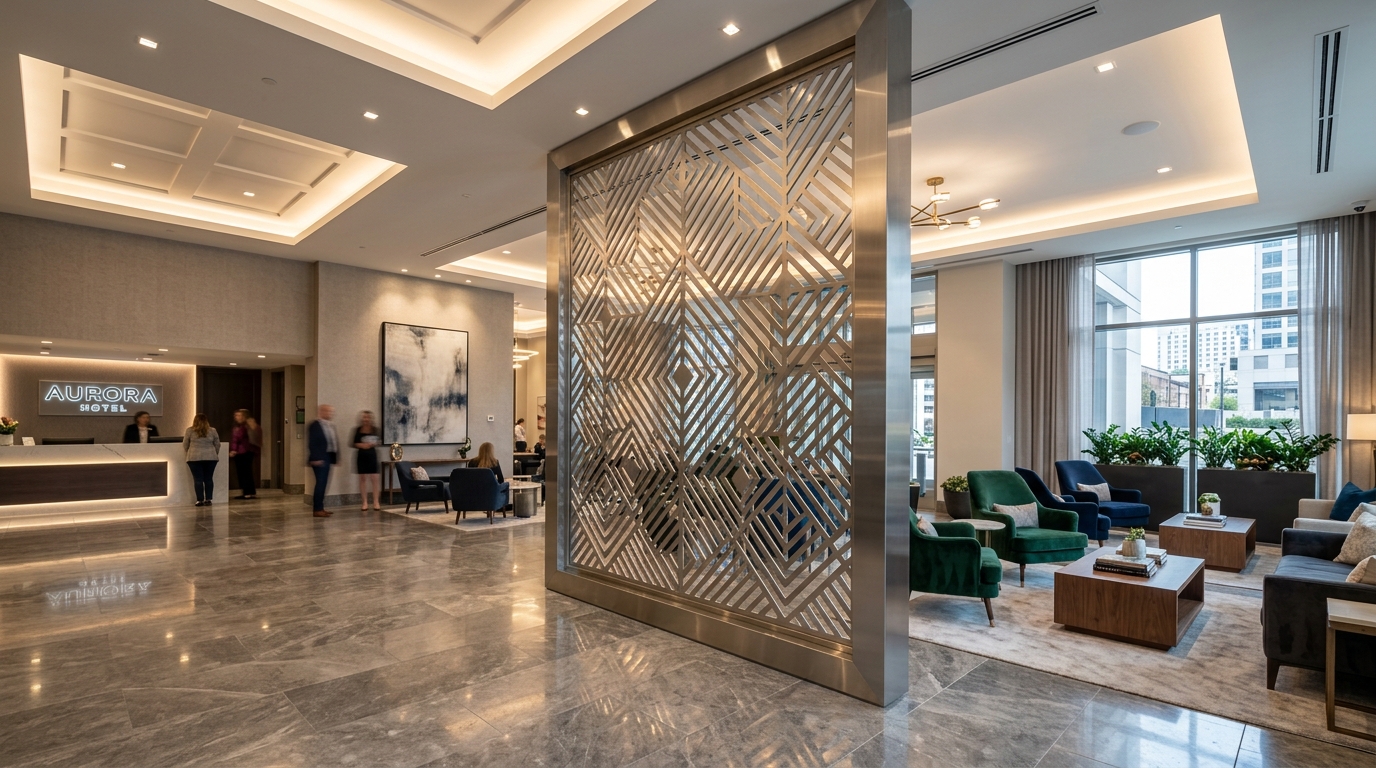
Stainless steel trim has quietly become one of the most reliable tools in a designer’s kit. From five-star hotel corridors to upscale residential lobbies, it is the detail that ties a room together—and the detail clients remember years later.
Walk into any newly completed high-end interior and look closely at the seams. The walls, the ceiling, the columns, the elevator door frames—almost every joint is finished with a piece of metal. More often than not, that metal is stainless steel. The reason is simple: nothing else delivers the same combination of visual refinement, structural reliability, and long-term value at this price point.
This guide explains why designers keep choosing stainless steel trim for modern interiors, compares the most common surface finishes and profile shapes side by side, and shows where it adds the most value on a real project.
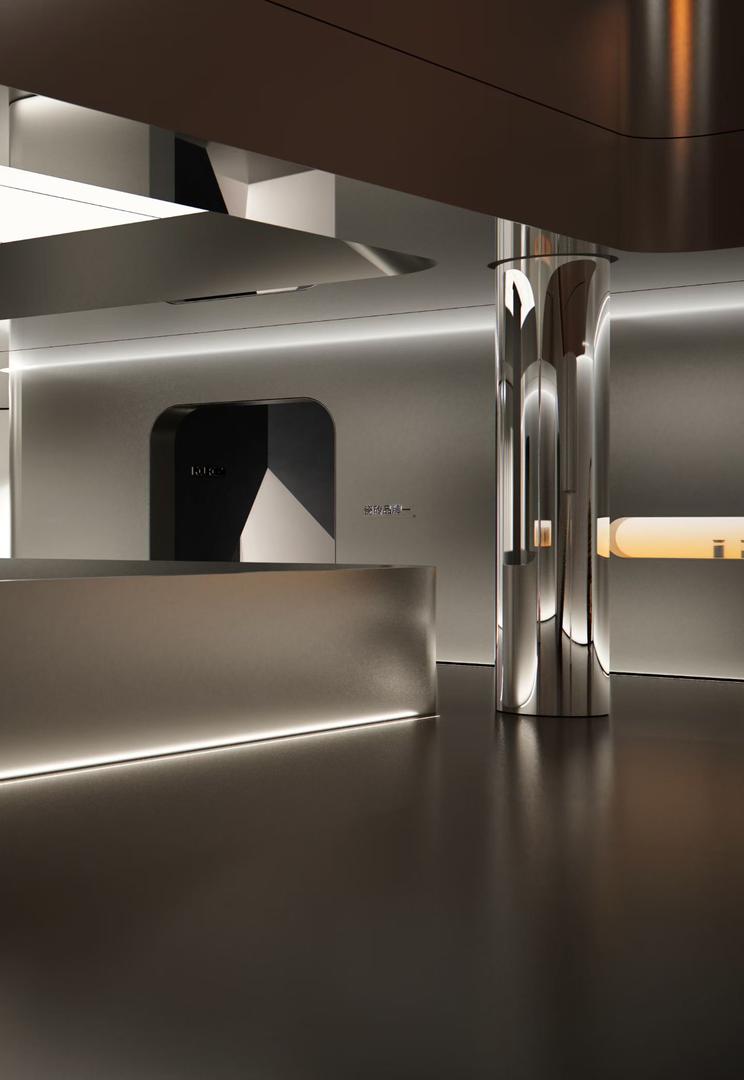
Stainless steel reflects light in a way that almost no other architectural material can. A 0.6–1.2 mm trim line along a panel joint is enough to make an entire wall feel more refined, more deliberate, more premium. Designers rely on this optical effect to:
Unlike paint or vinyl, stainless steel does not yellow, chalk, or fade. The finish you specify on day one is largely the finish you hand over five, ten, or fifteen years later.
Hospitality, retail, and high-traffic public interiors punish wall finishes. Stainless steel is one of the few materials that survives the punishment without showing it. The reasons come down to its metallurgy:
In short: stainless trim is specified once, installed once, and then largely forgotten. That is exactly the profile a designer wants for a project they will be judged on for the next decade.
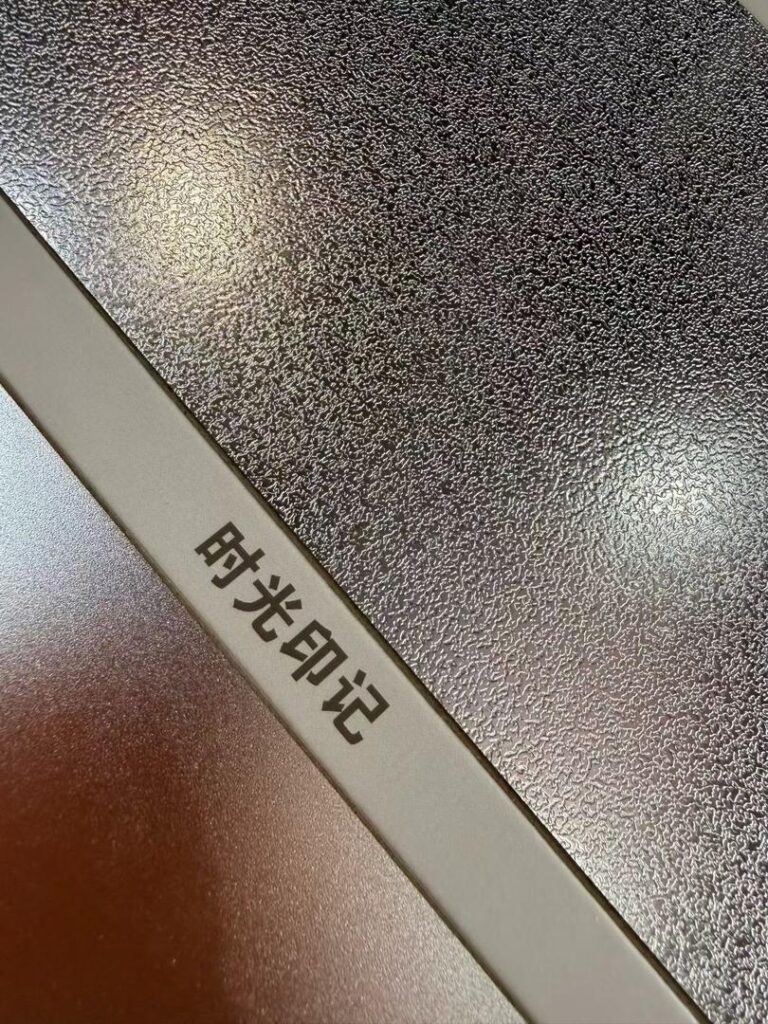
Stainless steel is not a style—it is a substrate. It can be finished, colored, and shaped to match virtually any interior vocabulary:
Because the metal accepts almost any surface treatment (mirror, brushed, bead-blasted, embossed, PVD-coated, anti-fingerprint coated), designers can keep using the same supply chain across very different projects.
The strength of stainless trim is that it solves problems in places where other materials fail. The four application zones below consistently deliver the biggest visual return per meter of profile.
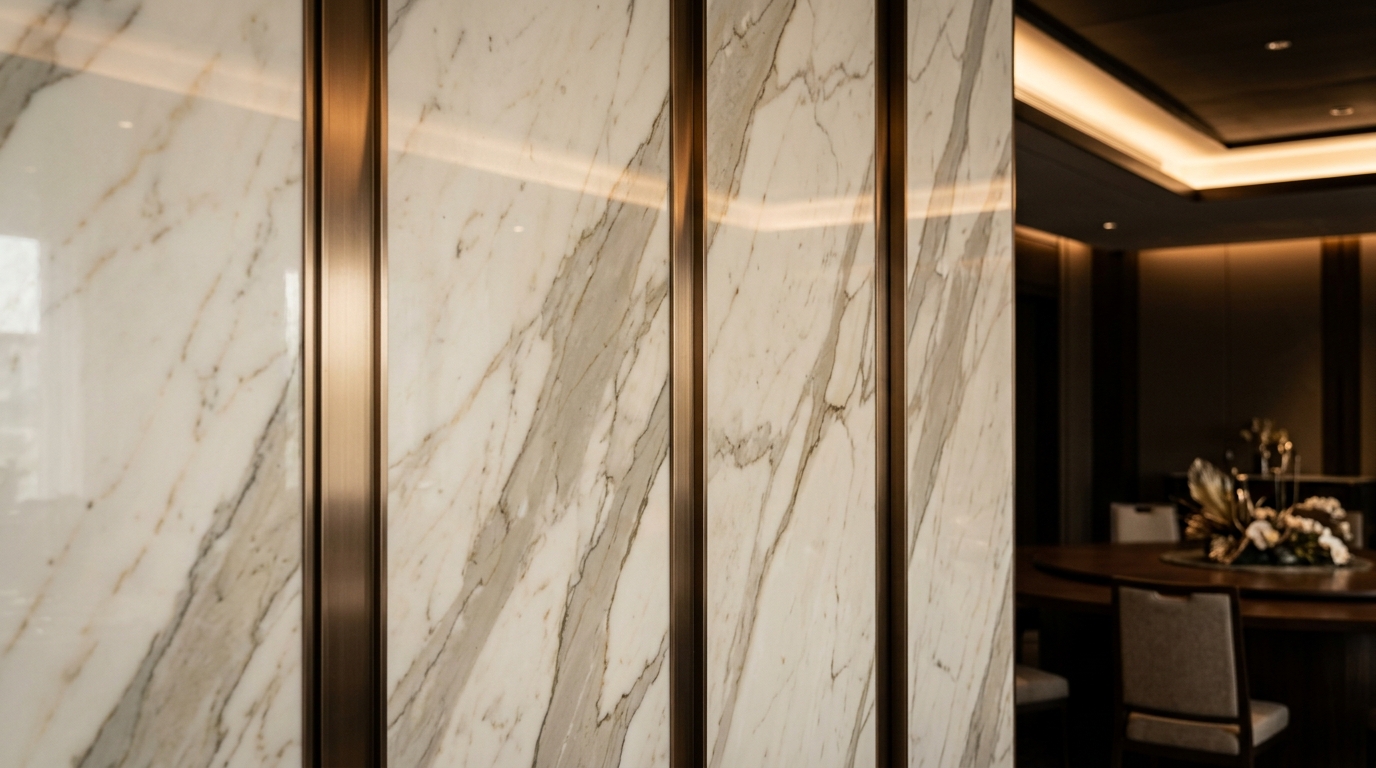
Vertical trim strips break up large stone or wood panels into a measured rhythm. The trim also hides the panel expansion gap, which would otherwise need a dark silicone seal that breaks the line. The result reads as one composed wall rather than a stack of slabs.
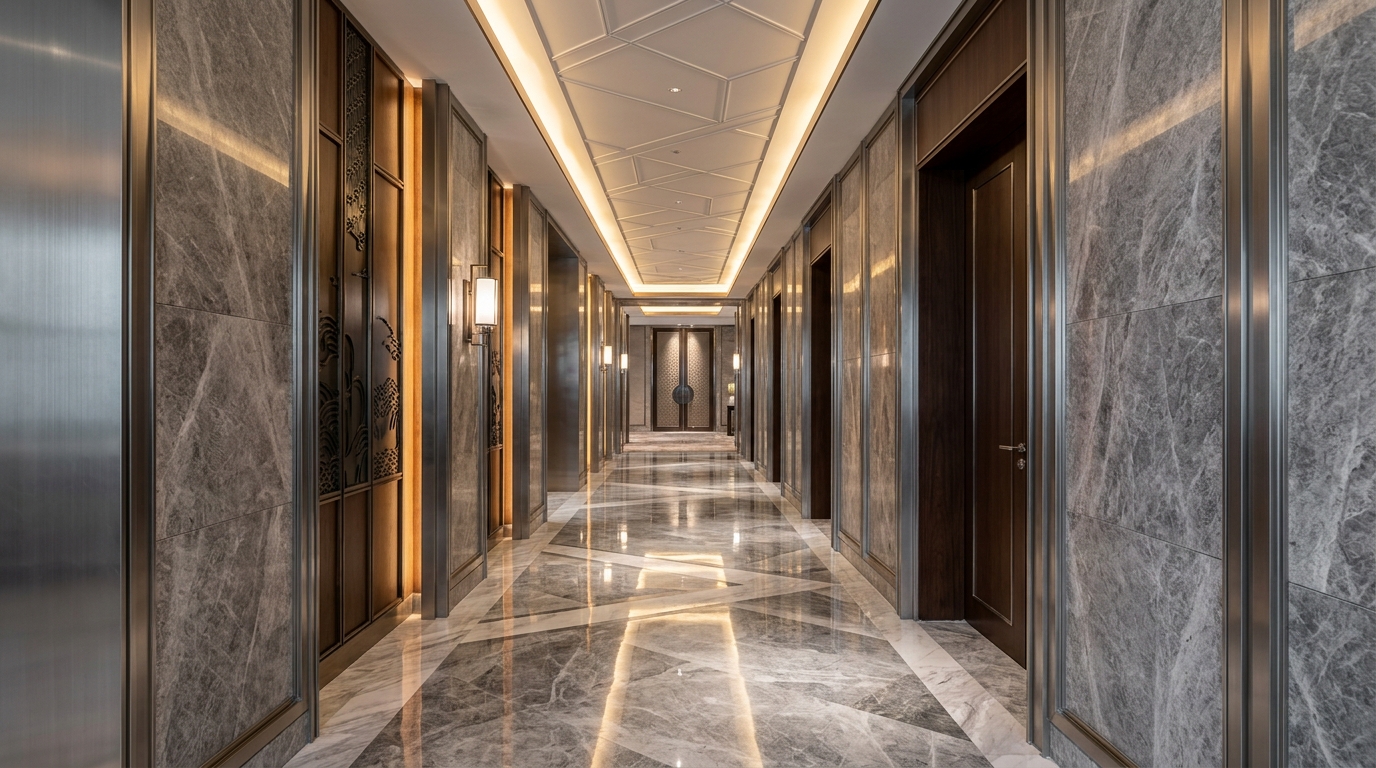
Circulation spaces take the most abuse and are seen by every guest. Trim around elevator jambs, door frames, and base-of-wall reveals protects the corners from trolley damage and keeps the corridor looking sharp years after handover.
Trim is not only a finishing line—it can also frame a feature. Laser-cut or laser-etched panels wrapped in stainless trim become a self-contained design element, used as a lobby focal point or a room divider.
Where the wall meets the ceiling, a small L-angle or U-channel trim absorbs the construction tolerance, hides the LED strip, and creates a clean shadow gap. This is one of the cheapest upgrades in the whole project for the visual impact it delivers.
The right finish depends on the lighting, traffic level, and design language of the space. The table below summarizes the most common options and where each one performs best.
| Finish | Look & feel | Best applications | Maintenance |
|---|---|---|---|
| Mirror (8K / BA) | High-gloss, reflective surface | Feature walls, elevator interiors, premium lobbies | Shows fingerprints; needs anti-fingerprint coating in public areas |
| Hairline / brushed | Fine directional grain, soft sheen | Hotel corridors, door frames, wall panel joints | Low—hides minor scuffs and fingerprints |
| No. 4 satin | Coarser, industrial grain | Back-of-house, service areas, industrial interiors | Very low; most forgiving finish |
| Bead-blasted | Matte, evenly textured | Acoustic panels, decorative screens | Low; fingerprints are not visible |
| PVD titanium coating | Champagne, bronze, black, rose gold | Luxury hospitality, high-end residential, retail | Low; hard coating resists wear and fingerprints |
| Anti-fingerprint nano | Invisible film over brushed or mirror | Elevator doors, touch zones, public corridors | Very low—dramatically reduces visible marks |
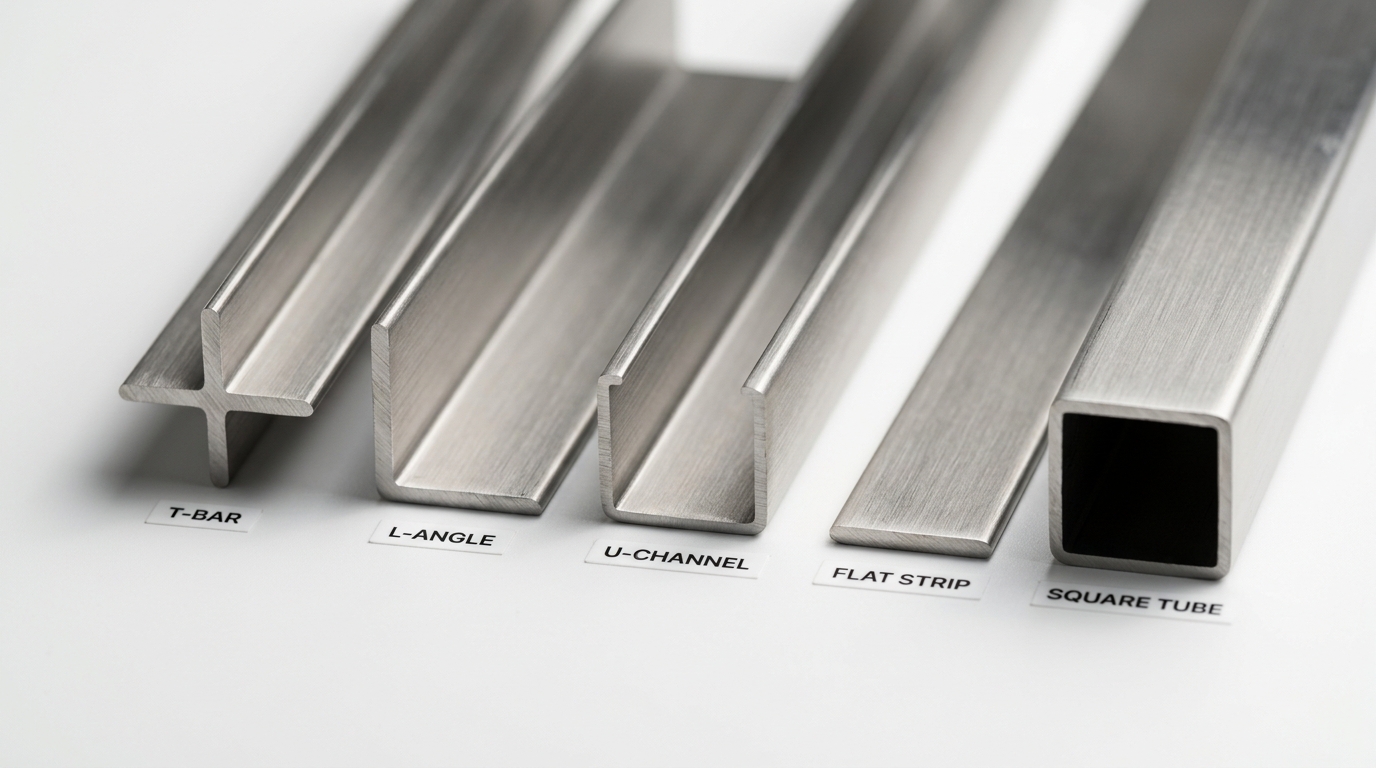
The profile you choose changes both how the trim looks and how it performs on site. Below are the five profiles most frequently specified by interior designers.
| Profile | Common sizes (mm) | Typical use | Key benefit |
|---|---|---|---|
| Flat strip | 10 × 1.0 – 100 × 3.0 | Surface division lines, panel reveals | Cleanest visual line; easy to bend |
| L-angle | 20 × 20 – 50 × 50 | Corners, edges, ceiling perimeters | Hides construction tolerance; protects the corner |
| U-channel | 10 × 10 × 10 – 30 × 30 × 30 | Glass partitions, panel inlays, lighting reveals | Holds panels in place and absorbs movement |
| T-bar | 10 × 20 – 30 × 50 | Mid-wall reveals, decorative dividers | Projects slightly off the wall for a sculpted line |
| Square tube | 10 × 10 – 50 × 50 | Heavy feature walls, column wraps | Stronger visual weight; doubles as a structural frame |
On a per-meter basis, stainless trim is more expensive than PVC or aluminum. On a per-year basis, it is usually cheaper. Designers who track the full life-cycle cost of their projects consistently find that stainless trim:
For a specifier, that translates to fewer punch-list items, fewer warranty callbacks, and a stronger handover narrative for the client.
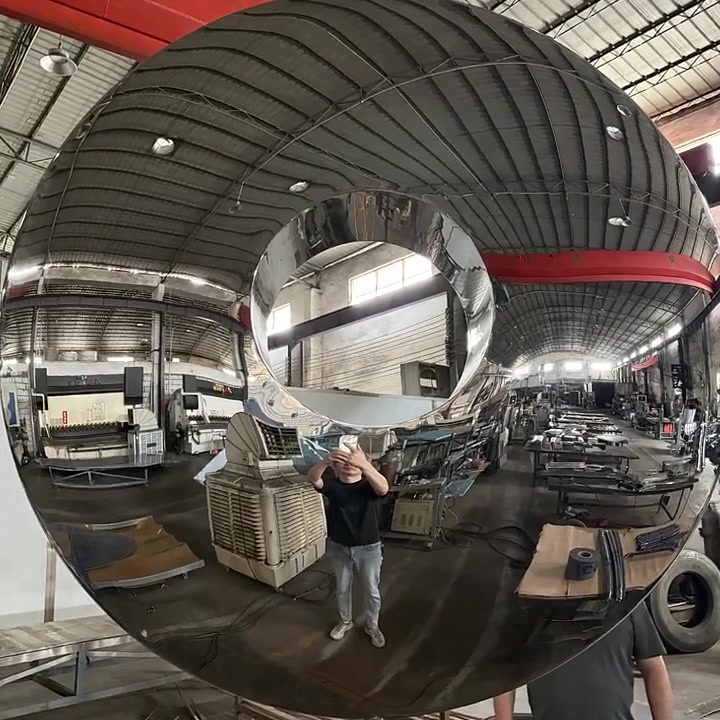
ARTDSN supplies custom stainless steel decorative trim and profiles for hospitality, commercial, and high-end residential projects worldwide. Our scope covers the full chain—from profile design and tooling to PVD coloring, anti-fingerprint coating, custom bending, and on-time export packing.
If you are working on a project that needs a specific profile, finish, or color, send us the drawing or a sample of the existing material. We will return a sample set, a quotation, and a realistic production lead time within a few business days.
ARTDSN — Stainless steel decorative metalwork, made to specification.