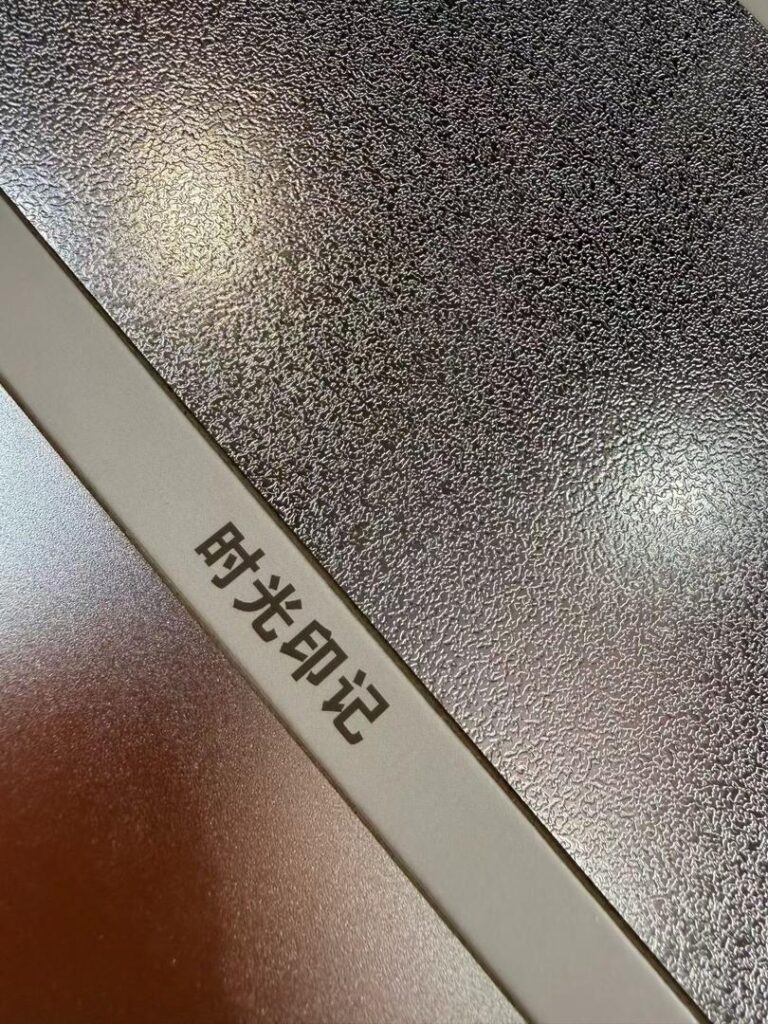



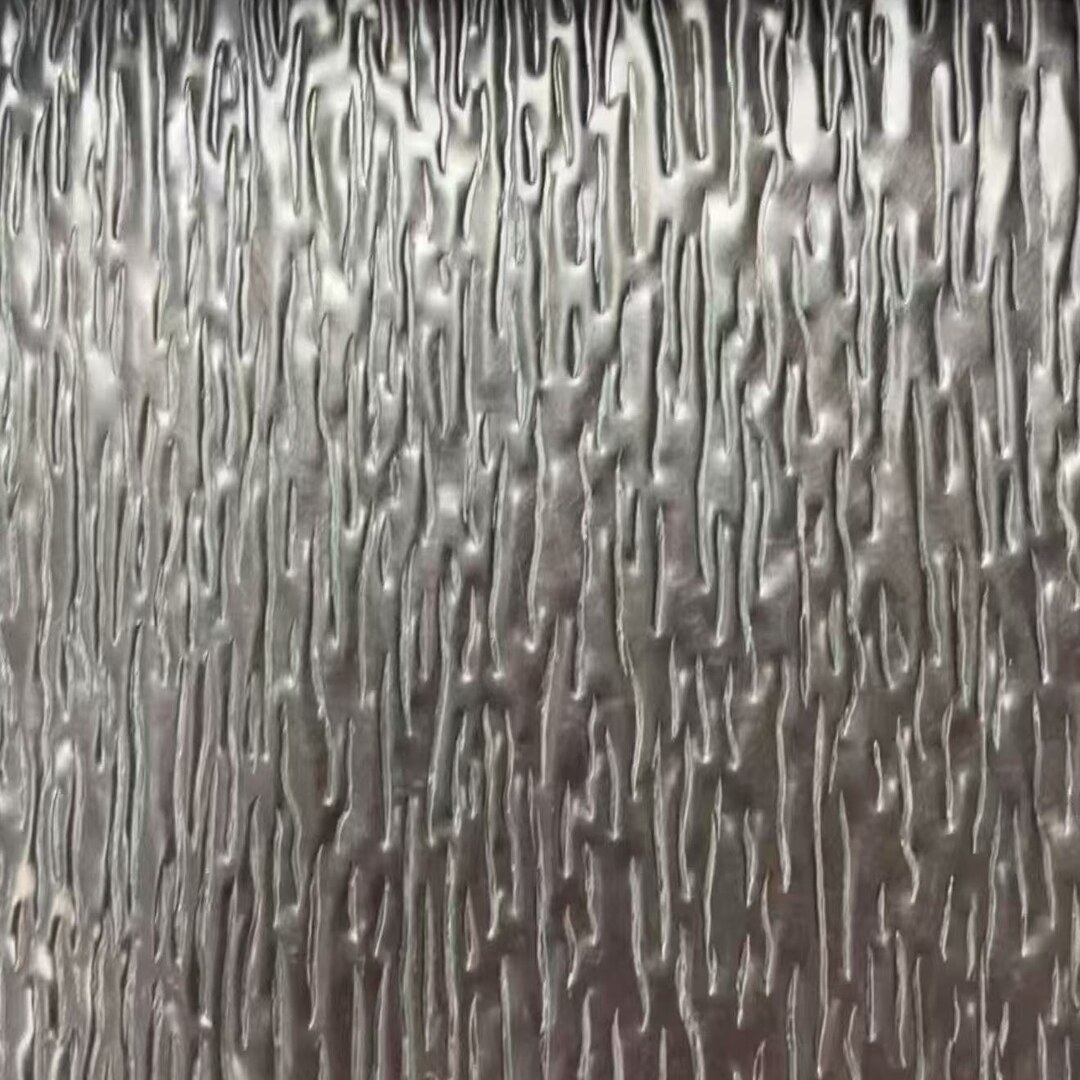
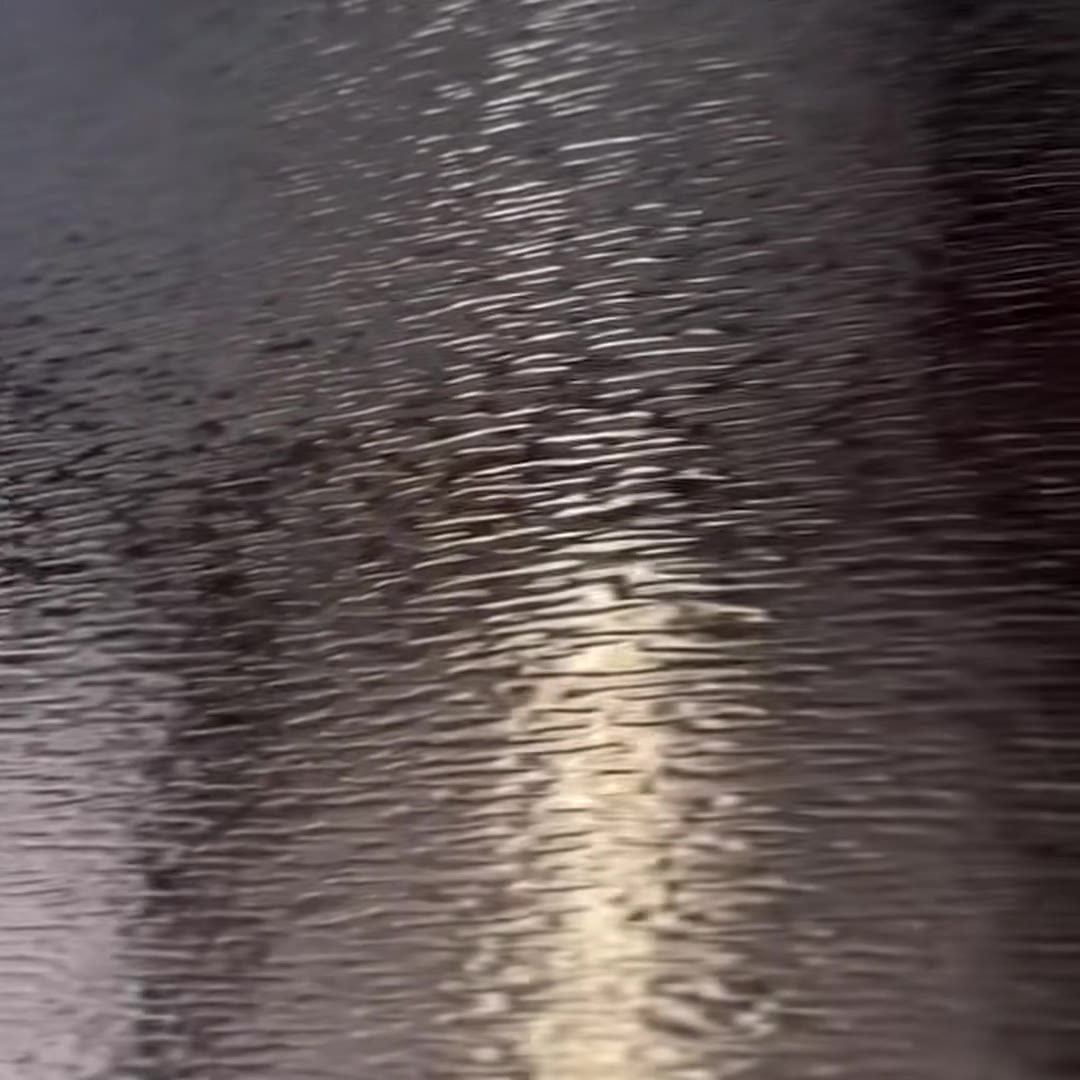
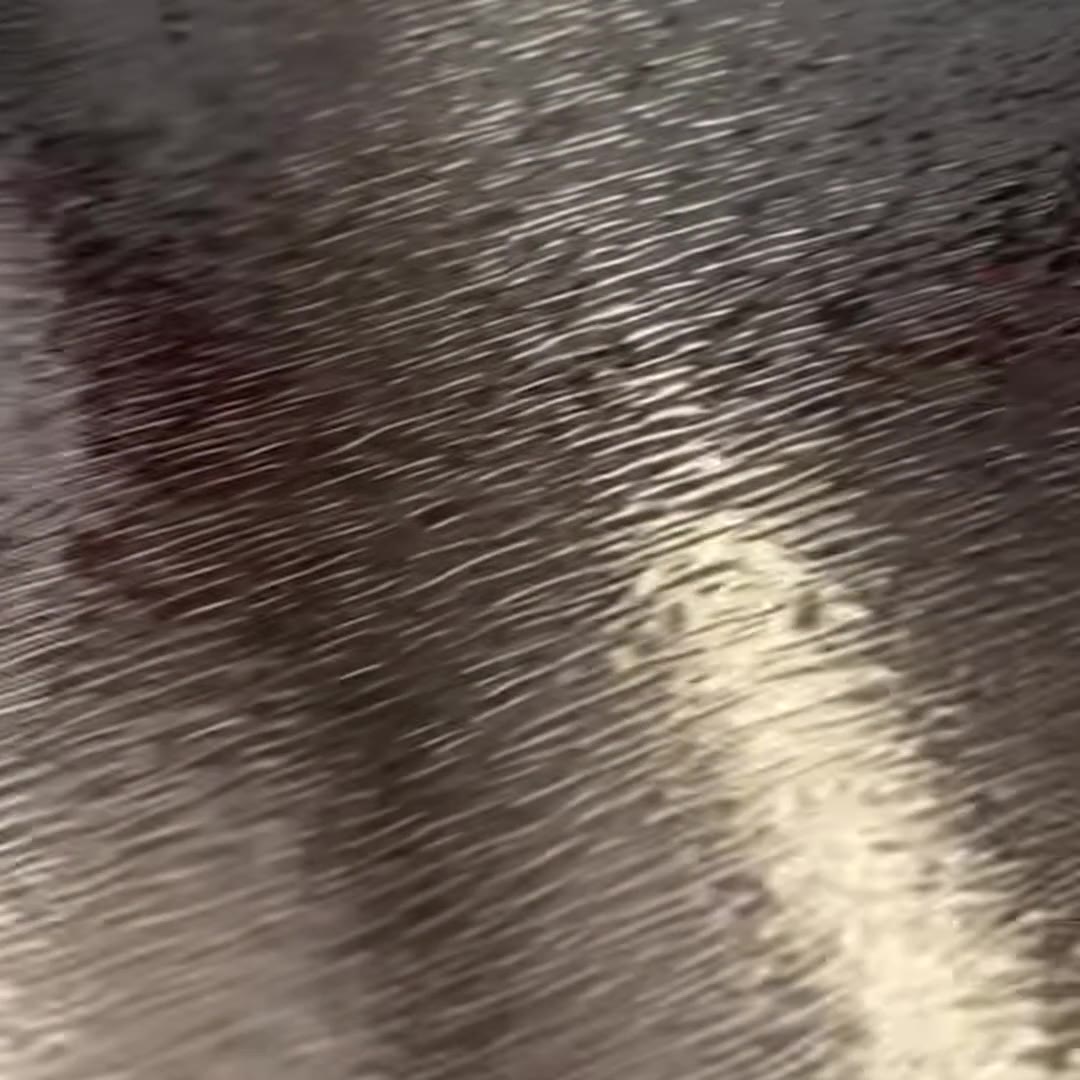
This square clip is a macro pass across one square metre of our tree bark texture stainless steel sheet. The camera is close enough that the panel has no visible edges — only relief, running the full height of the frame. A single low light source moves across it, and the film is really a study of what that light does: the tops of the ridges flare into a bright specular band, the grooves between them fall into shadow, and as the light travels the highlight slides down into the hollows and the surface appears to flatten, then re-emphasises itself. Nothing here is a print or an overlay. The depth is in the metal.
|  |
The pattern is produced by pressing sheet between matched male and female dies, not by etching, coating or printing a graphic onto a flat surface. That distinction matters more than it sounds. A printed texture is a few microns of pigment sitting on top of a mirror: it can be sanded through, it wears at doorways and on corners first, and it does not move with the light. A pressed relief is the sheet itself. It cannot delaminate, it keeps working at eye level and at shoulder height where handles and trolley corners attack a wall, and its shadow pattern is cast by the same light that lights the room.
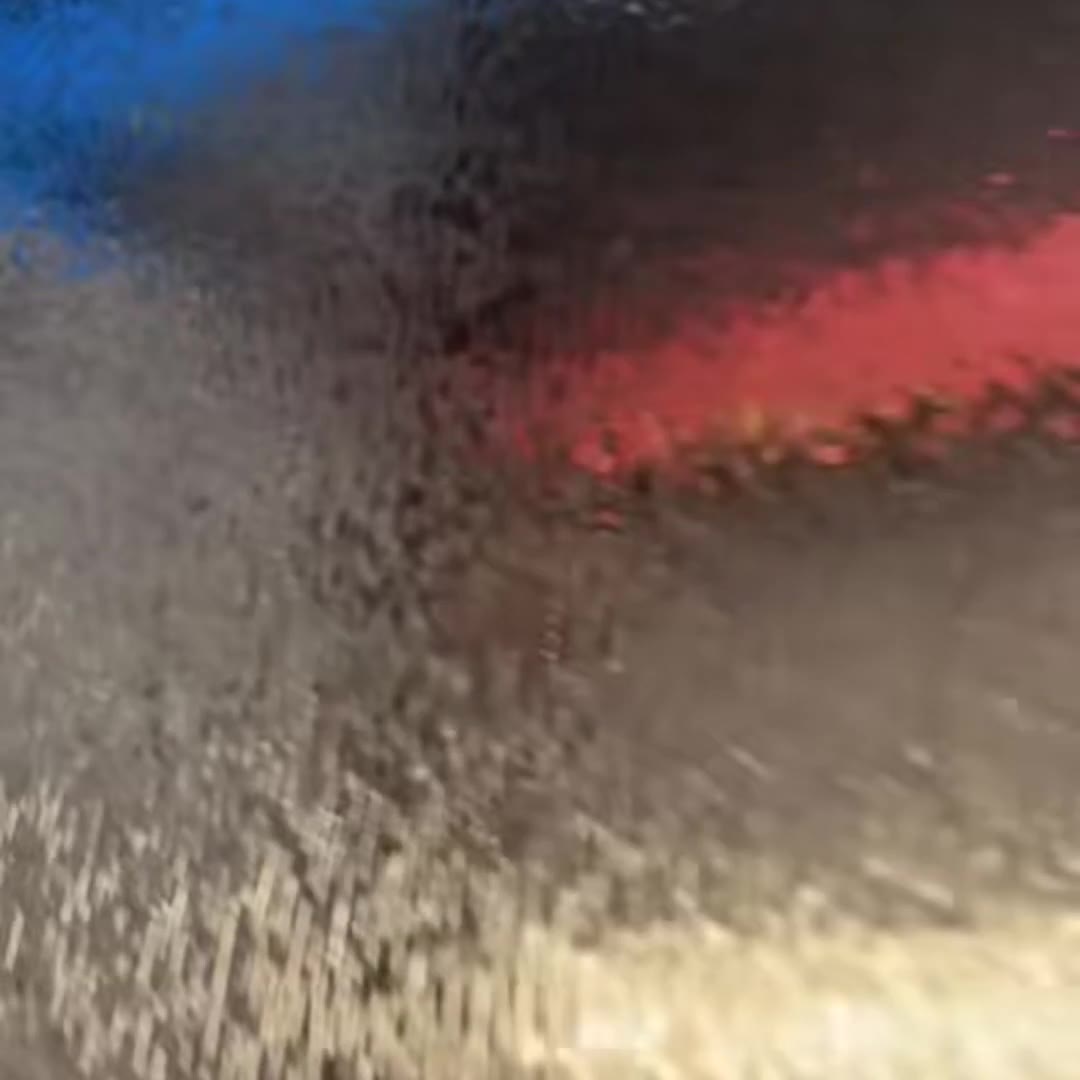
Because the relief is directional and irregular rather than a repeating geometric motif, there is no obvious tile. Sheets can be butted, lapped or run continuously across a surface, and the eye reads a field of bark rather than a grid of panels. Coloured light behaves particularly well on it — the last frame of the film shows blue and red reflected in the hollows, which is what makes this pattern a favourite for reception walls and entrance lobbies where the lighting design is doing as much work as the metal.
 |  |
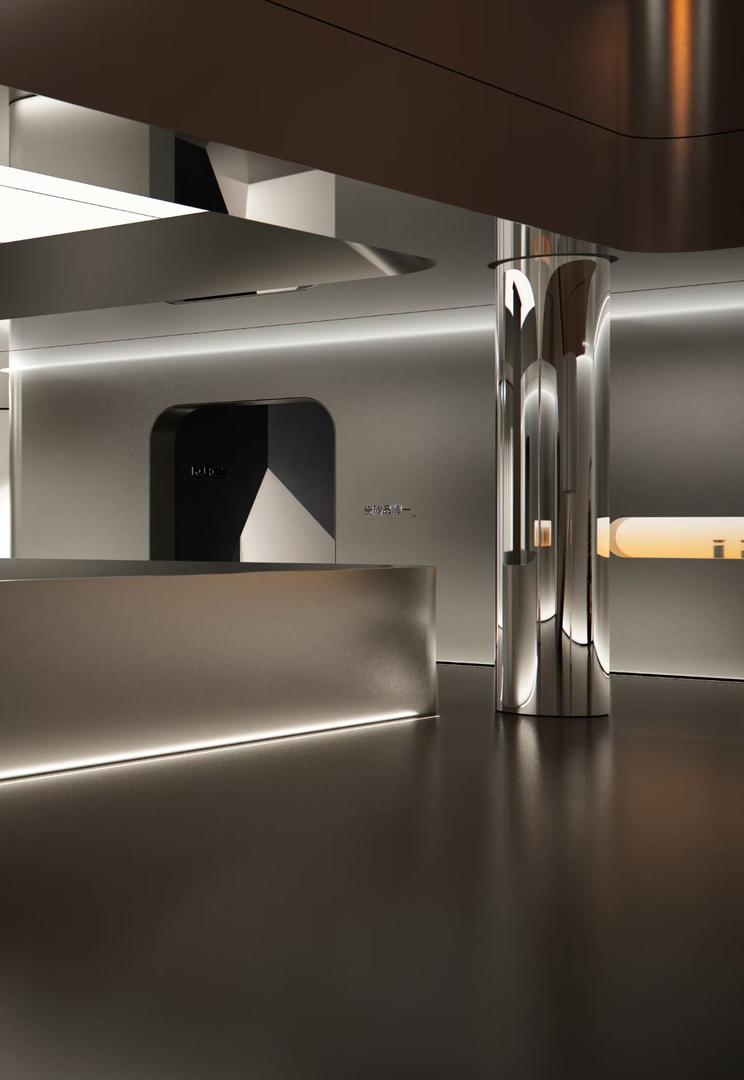
The same sheet is used across a wide range of architectural and interior work. It is most often specified for wall surfaces — feature walls in hotels, offices, showrooms and retail — where it gives a wall depth without a printed motif. It is equally at home cladding columns, wrapping round a structural or decorative column to break up a large cylindrical or square surface. For door casings and main entrances, the texture can be carried continuously from the casing into the surrounding wall so a doorway reads as one carved opening rather than a hole punched in a flat plane. It also works overhead as a ceiling or a soffit, where the raking light from perimeter coves picks the relief out from below.
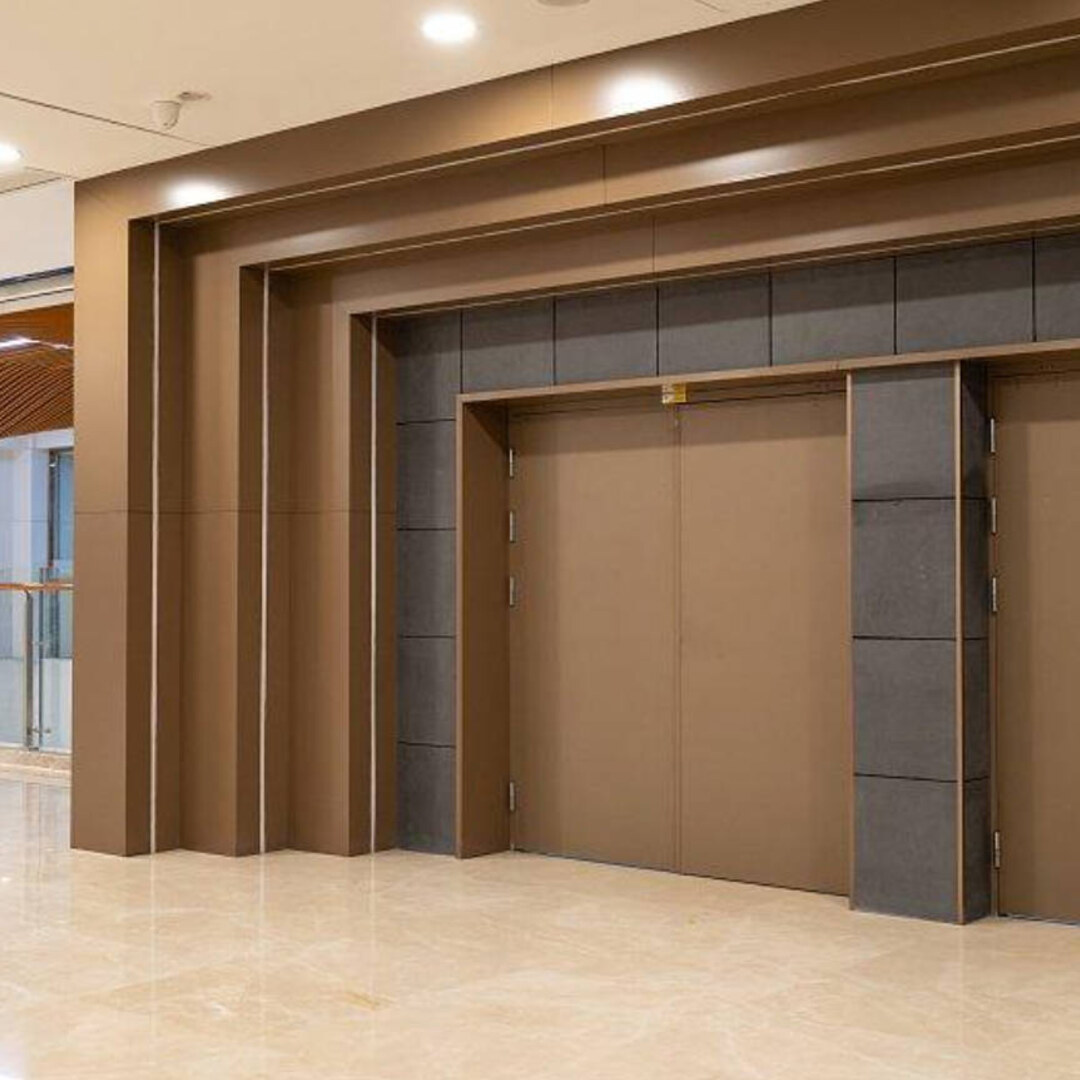 | 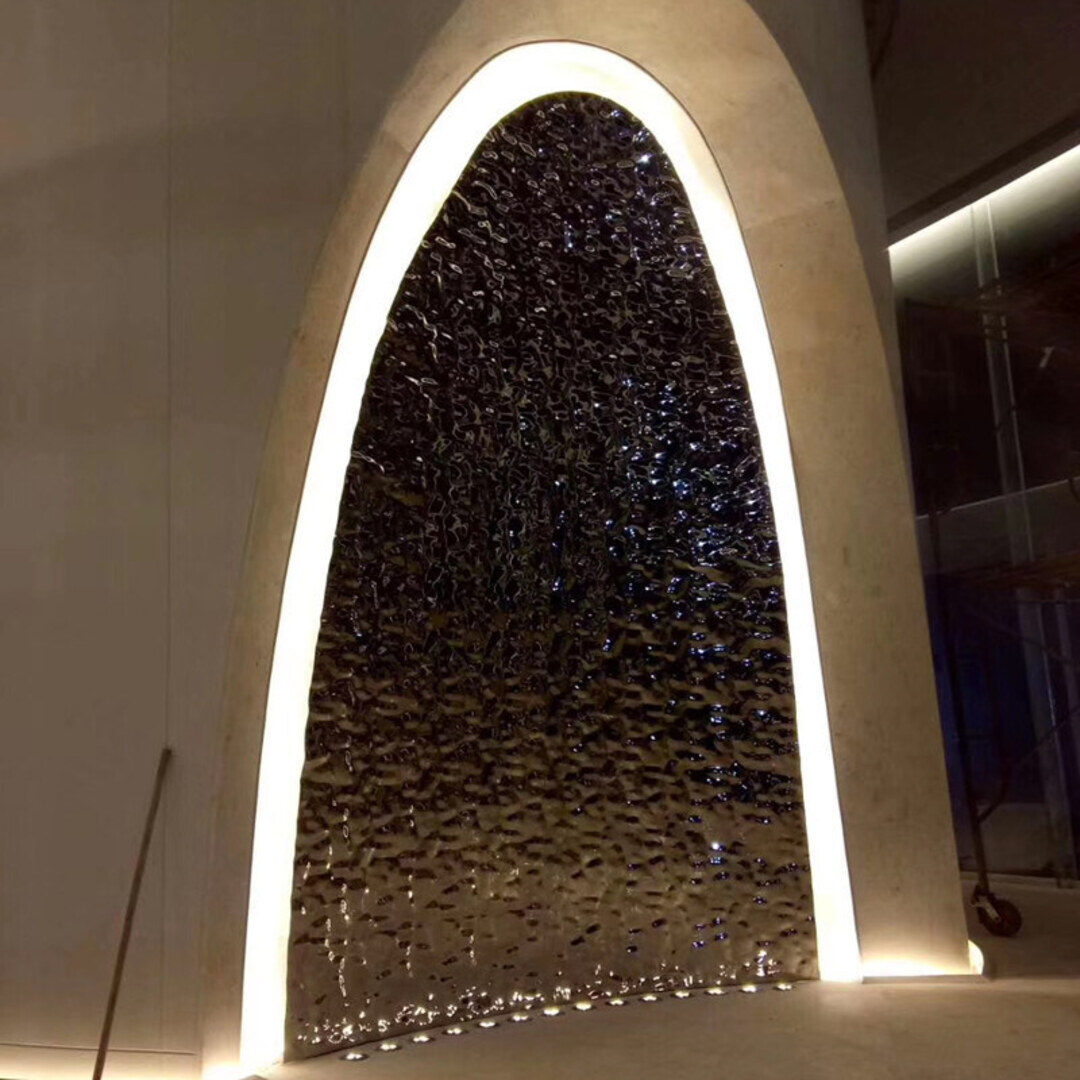 |
The two installations above show how far the same pattern travels. On the left, textured cladding is formed into stepped portal frames around a set of entrance doors, so the relief runs vertically through the jambs and catches the downlights that wash the frame. On the right, a heavily textured sheet is set inside a backlit pointed arch, where the light is hidden behind the reveal and the panel is read almost entirely in silhouette and sparkle — the arrangement that shows the depth of the pattern most dramatically.
We produce this as pressed sheet and also form finished elements from it — casings, returns, trims, ceiling rafts and complete cladding panels — cut and welded to the dimensions of the elevation. Sheet size, relief depth, sheet thickness and finish (brushed, mirror polished or a coloured PVD / electroplated coating in bronze, champagne or black) are all adjustable to the project. If you send us a drawing, a photo of the finished space, or just an idea of the surface you want, we will come back with a sample and a quotation.
To see the pattern move under light, watch the square clip above. To ask for a sample, a size list or a project quotation, contact ARTDSN.