ARTDSN · Architectural Stainless Trim · Technical Insight
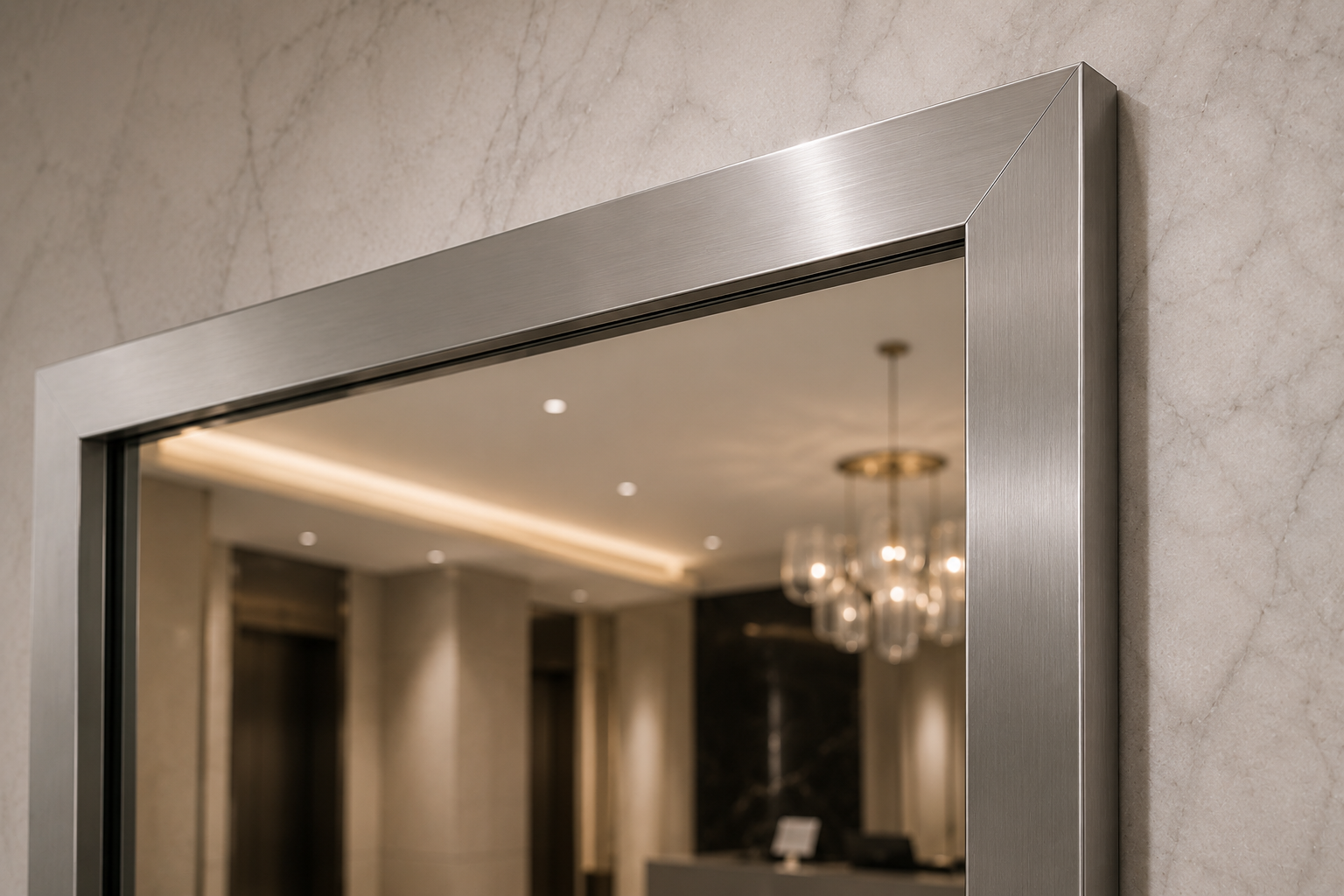
In modern hotel lobbies, luxury retail interiors, and high-end residential dressing rooms, a
stainless steel mirror frame is the small detail that quietly signals the quality of the entire space.
But behind that clean, seamless edge there is a critical construction decision: how the frame is installed
around the mirror. Get it wrong and the mirror can be ruined during welding — or trapped permanently
in place, impossible to replace without breaking the wall.
This short technical brief walks through the three mainstream methods used in the industry to install
a stainless steel mirror frame, compares their pros and cons, and highlights the method we recommend
at ARTDSN for almost every commercial and residential project.
Method 1 — Traditional Installation (Mirror First, Then Frame)
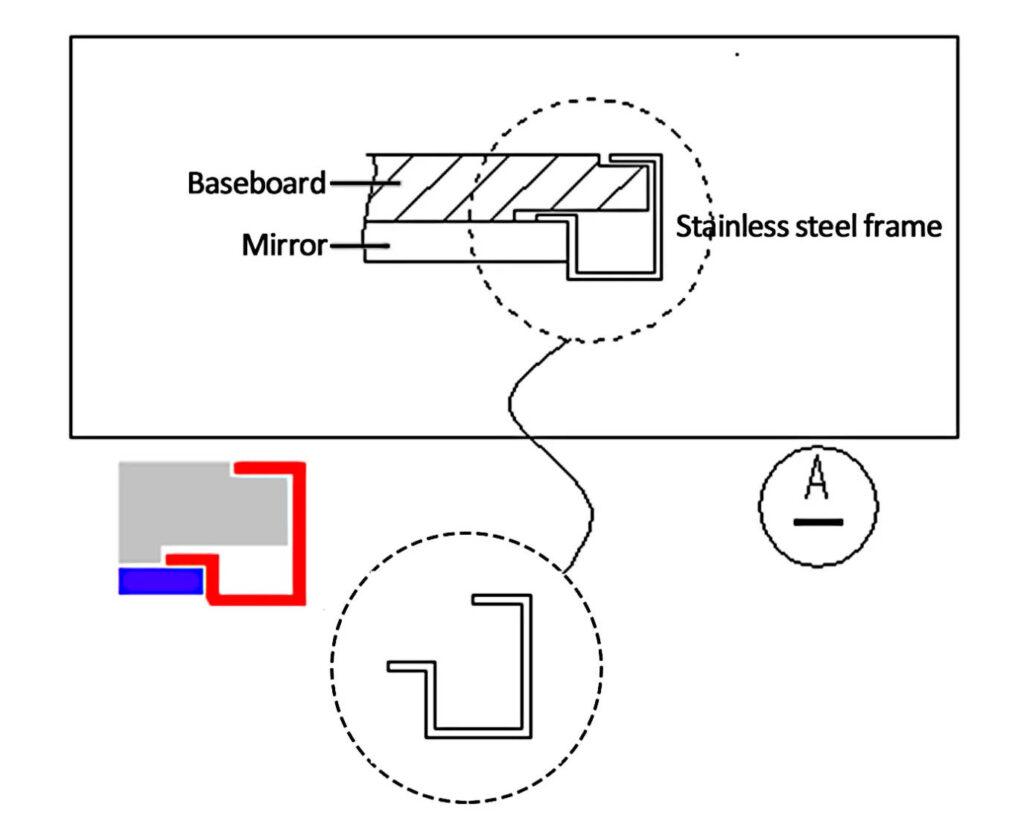
The most familiar approach on site is also the simplest in theory: install the mirror first, then
weld a stainless steel frame around its edge. The frame is cut to length, mitred at the corners,
and welded directly onto the wall (or baseboard) around the perimeter of the mirror.
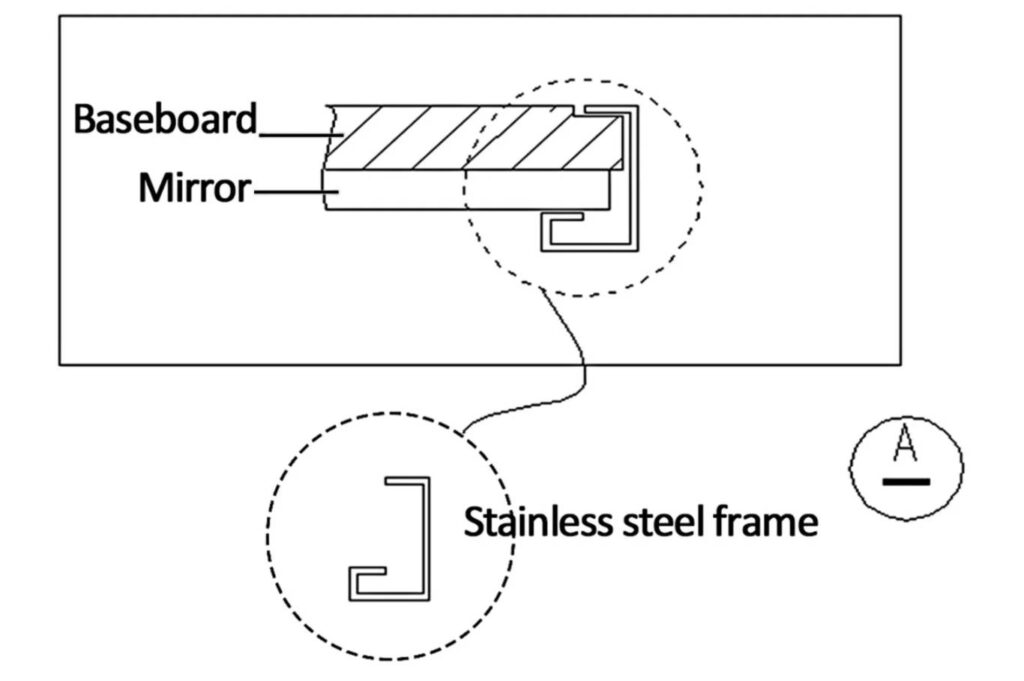
Diagram 1 — Cross-section of the traditional on-site welding method.
Where it falls short
- Mirror damage during welding. On-site welding throws spatter, and even with careful masking the heat and stray droplets can score or stain the glass surface.
- Weld gaps are hard to finish cleanly. A small gap between frame and mirror is almost inevitable, and grinding & polishing it flush on site is time-consuming.
- Mirror replacement is a demolition job. If the mirror is later cracked or scratched, the frame has to be cut off — destroying both the frame and the wall finish around it.
For these reasons, Method 1 is now considered a fallback — used only when no other option is possible.
Method 2 — Frame-First Installation (Channel Set, Mirror Inserted)
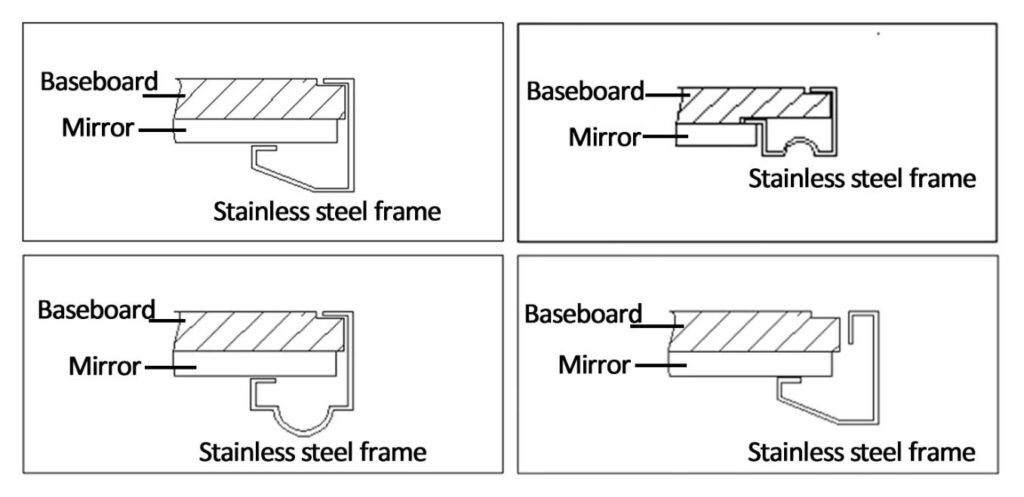
In this method, the stainless steel frame is installed first as a U-channel that is fixed to the wall.
The mirror is then lowered into the channel as a separate, final step. To make the mirror removable, an
expansion gap of 1 – 2 mm is left around the perimeter.

Diagram 2 — Stainless U-channel is fixed first, the mirror is inserted afterwards.
What it gets right
- Mirror is fully protected during installation. No welding is performed near the glass.
- Broken mirrors can be replaced. The mirror is a separate component that can be unbolted or lifted out, and a new one slotted in.
- Cleaner visible finish. The frame edge can be polished before the mirror is fitted, so the finished joint looks sharper.
What it requires
- Accurate on-site measurement. The 1 – 2 mm tolerance must be maintained on all four sides — too tight and the mirror will not seat; too loose and it will rattle and look unfinished.
- Frame channel dimensions must match mirror thickness. Most architectural mirrors are 5 mm or 6 mm; the channel leg height should be specified to match.
Method 2 is a solid choice when the mirror is supplied separately by the interior fit-out contractor and
arrives only after the metalwork is complete.
Method 3 — Prefabricated Frame (Factory-Welded, Site-Assembled) — Recommended
The third — and in our experience, the best — approach is to build the entire stainless steel frame
in the factory, then transport it to site as a single unit and fix it in place around a pre-measured
mirror opening.

Diagram 3 — Prefabricated frame: mitred corners and welds are finished in the workshop.
Why we prefer it
- Factory welds beat on-site welds. A controlled workshop environment allows TIG welding of all four mitred corners, followed by proper dressing and polishing. The finished weld is almost invisible.
- Dimensional accuracy. The frame is built to the mirror’s exact opening size (within ±0.2 mm), so the mirror drops in cleanly with no field adjustment.
- Faster site installation. The prefabricated frame is simply fixed to the wall (mechanical anchors or adhesive, depending on the substrate), and the mirror is slid into place from the front. No hot work at the mirror face.
- Future serviceability. A clip or rebate detail can be added so the mirror can still be removed and replaced without cutting the frame.
- Better surface finish. The mirror-polish, hairline, or PVD colour coating is applied to the complete frame in the factory — the surface stays protected in transit and is not marred by on-site grinding.
Quick Comparison
| Criteria |
Method 1
Traditional |
Method 2
Frame First |
Method 3
Prefabricated ★ |
| Risk of mirror damage on site |
High |
Low |
Very low |
| Weld quality |
On-site, hard to finish |
On-site, near glass |
Factory TIG, polished |
| Mirror replacement |
Very difficult |
Easy |
Easy (with clip detail) |
| Dimensional accuracy |
Depends on site |
±1 – 2 mm |
±0.2 mm |
| Site install time |
Long (weld + finish) |
Medium |
Short |
| Overall finish |
★★★ |
★★★★ |
★★★★★ |
How ARTDSN Delivers Method 3
At ARTDSN, our Xiamen facility produces prefabricated stainless steel mirror frames in
201, 304, and 316 grade stainless steel, with finishes including mirror polish, hairline, and PVD
gold / rose gold / black. Every frame is:
- CNC laser-cut and CNC press-brake bent to ±0.1° accuracy,
- TIG-welded at the corners and fully dressed & polished,
- Assembled dry against a QC mirror template before packing,
- Wrapped individually and crated with corner protection for shipment worldwide.
For projects that also need the mirror, we can coordinate the mirror opening dimensions with your glass
supplier so the mirror drops in on site with no field adjustment.
Key Takeaways
- A stainless steel mirror frame is a small detail with a big impact — the install method determines the finished look and the long-term serviceability.
- The traditional on-site welding method (Method 1) carries a real risk of mirror damage and is the hardest to repair later.
- The frame-first channel method (Method 2) is a good compromise if the mirror is supplied separately.
- The prefabricated factory-welded frame (Method 3) gives the cleanest welds, the best surface quality, the fastest site install, and the easiest future replacement — which is why it is our default at ARTDSN.
Looking for a custom stainless steel mirror frame, edge trim, or partition frame for your project?
Contact the ARTDSN team for samples, technical drawings, and a quotation.
© ARTDSN — Manufacturer of Stainless Steel Architectural Trims. artdsn.com